
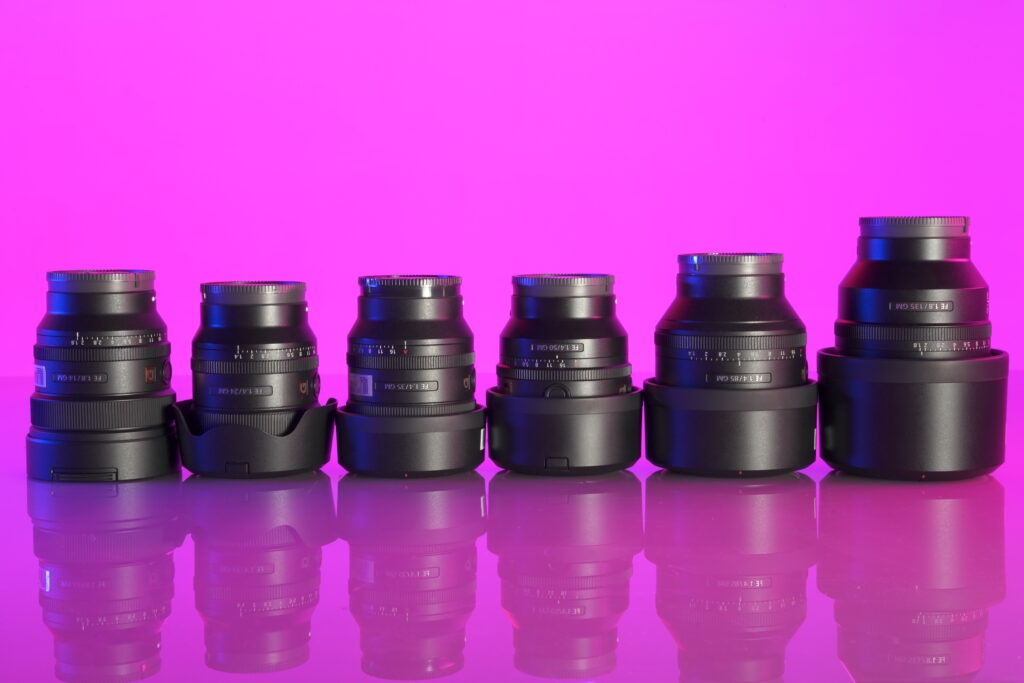
Sony GMaster Primes

Sony G Master Prime Lens Set – E-Mount (14, 24, 35, 50 f/1.4, 50 f/1.2, 85, 135)

  • E-Mount | Full-Frame Coverage – Flagship prime lens set engineered for high-end cinematic, commercial, and editorial production

  • Prime Lens Set (14–135mm) – Ultra-wide to telephoto focal lengths covering a complete professional shooting range

  • Fast G Master Apertures – Wide maximum apertures including f/1.4 and f/1.2 options for exceptional low-light performance and depth control

Key Features:
Advanced XA and ED optical elements for extreme resolution and minimal aberrations; Nano AR Coating II to reduce flare and ghosting; rounded 11-blade diaphragms for smooth, cinematic bokeh; fast, precise autofocus with linear motors; minimal focus breathing for video capture; dust- and moisture-resistant construction optimized for professional workflows

INCLUDES
– Sony Gmaster Prime 14mm Lens
– Sony Gmaster Prime 24mm Lens
– Sony Gmaster Prime 35mm Lens
– Sony Gmaster Prime 50mm f/1.4 Lens
– Sony Gmaster Prime 50mm f/1.2 Lens
– Sony Gmaster Prime 85mm Lens
– Sony Gmaster Prime 135mm Lens
-6x Lens Case
-6x Sony Prime Front Lens Cap
-6x Sony Prime Lens Hood

Sony Primes

Shooting with the Sony G Master Prime Lenses

The G Master set is the natural glass for a Sony camera package, and it is a strong set on its own terms — a wide focal spread from 14mm to 135mm with fast apertures, including both a 50mm f/1.4 and a 50mm f/1.2 if you want the extra stop. Native E-mount means autofocus works properly, which matters more than people admit on documentary and event work where there is nobody pulling focus.

If your shoot relies on autofocus, native glass like this is worth the booking over adapted lenses, which is where AF usually gets unreliable.

Sony G Master Prime Lenses Rental FAQs

Why rent G Master primes instead of adapting other glass?

Native E-mount keeps autofocus and stabilisation working properly. On documentary and event shoots without a focus puller, that is often the deciding factor.

Which 50mm should I take?

The f/1.2 if you want the shallowest depth and the extra stop; the f/1.4 is lighter and a little easier to work with. We can send both if you are undecided.